1987
16 Mar 1987
Robert Te Kotahi Mahuta, the Tainui Māori Trust Board and Ngā Marae Tōpu file the Wai 30 claim in the Waitangi Tribunal, covering land, river and West Coast harbours following the Crown’s raupatu (invasion and confiscation) in the 1860’s which strips Waikato-Tainui of their lands and denies the iwi’s rights and interests in the Waikato River
“Noo taatou te awa. Noo te awa taatou. E kore e taea te wehe te iwi o Waikato me te awa. He taonga tuku iho naa ngaa tuupuna. E whakapono ana maatou ko taa maatou, he tiaki i taaua taonga moo ngaa uri whakatupu.”
The River belongs to us just as we belong to the River. The Waikato tribe and the River are inseparable. It is a gift left to us by our ancestors and we believe we have a duty to protect that gift for future generations.
Sir Robert Te Kotahi Mahuta

1995
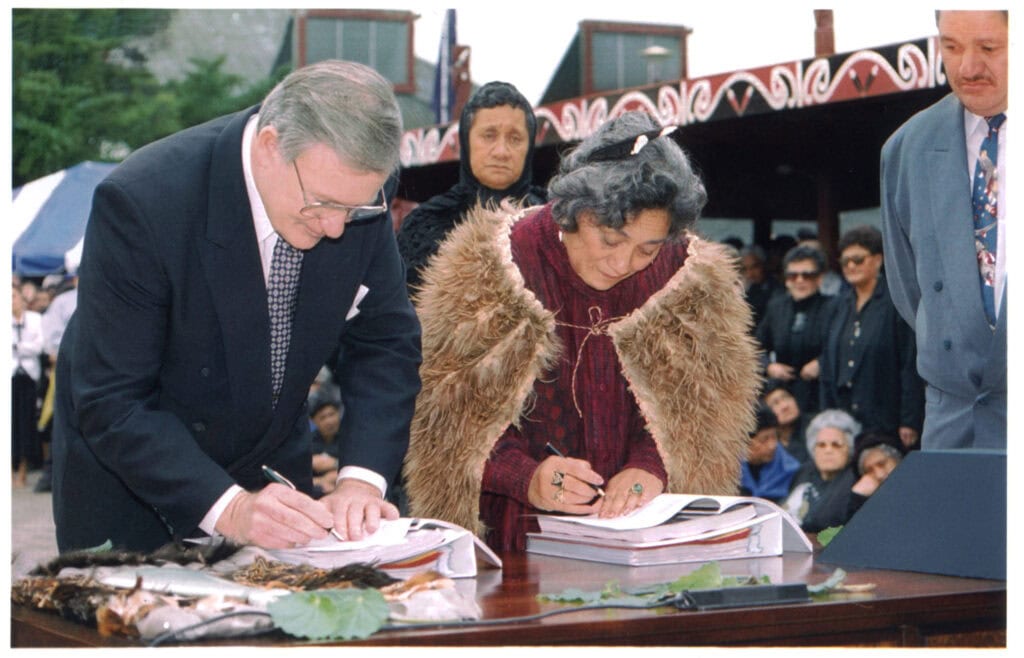
22 May 1995
Prime Minister Rt Hon Jim Bolger signs the Waikato-Tainui Raupatu Deed of Settlement with Te Arikinui Dame Te Atairangikaahu at Tūrangawaewae Marae on 22 May 1995. Supporting Te Arikinui is Ngāti Tipa kuia Rangihinemutu Rawiri (rear), while witnessing the signing beside Te Arikinui is her son, Tuuheitia Paki. Image: Tai Moana.
A small historical note: the settlement was the first major historical Treaty settlement between the Crown and an iwi, providing a landmark moment in the Treaty settlement process. The package was valued at $170 million in cash and landand included a relativity mechanism to recognise Waikato-Tainui’s position as the first major settlement.
1995
3 Nov 1995
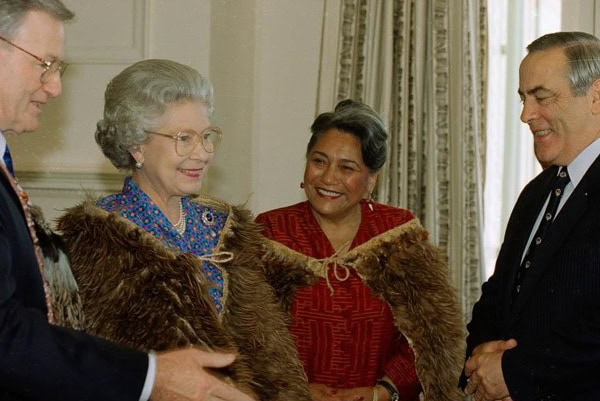
The Waikato Raupatu Claims Settlement Act 1995, signed by Queen Elizabeth, gains assent.
Credit
Alexander Turnbull Library
Reference: EP/1995/4375B/33A-F
2004
Sep 2004
Tukoroirangi Morgan and Lady Raiha Mahuta were appointed as the official co-negotiators for Waikato-Tainui in June 2004 by Te Kauhanganui o Waikato Incorporated. They successfully led historic talks with the Crown regarding the Waikato River claim, culminating in the signing of the landmark settlement deed in 2008 and subsequent co-management agreements.
2008
14 Mar 2008
The Guardians Establishment Committee held its first meeting in March 2008, marking the beginning of a collaborative process to develop a shared Vision and Strategy for the restoration and protection of the Waikato River.
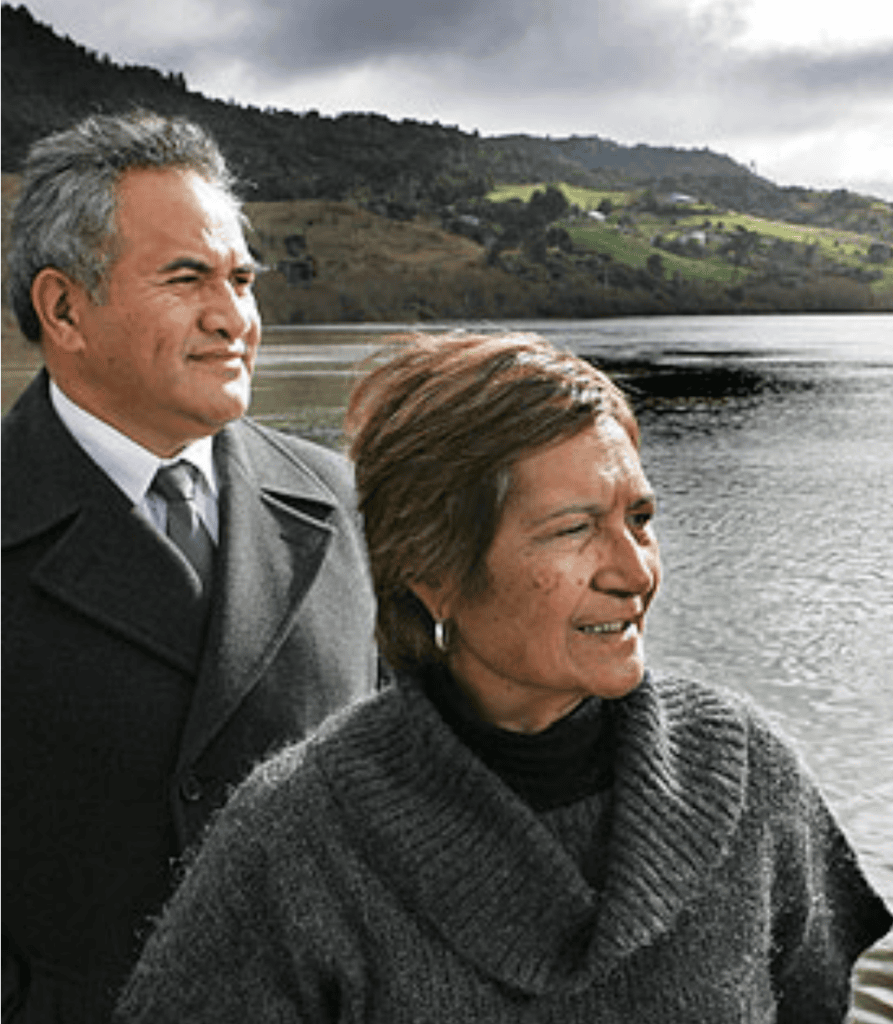
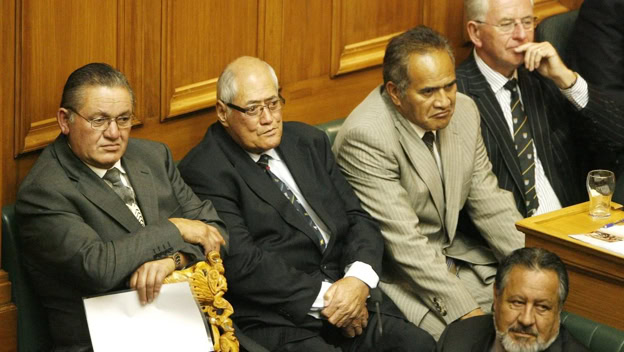
The Committee was tasked with preparing consultation and final drafts of the Vision and Strategy for recommendation to the Crown and Waikato-Tainui. Co-convened by Dr Michael Cullen and Tukoroirangi Morgan, the Committee was later co-chaired by Gordon Blake (pictured) and Tukoroirangi Morgan.
2008
22 Aug 2008
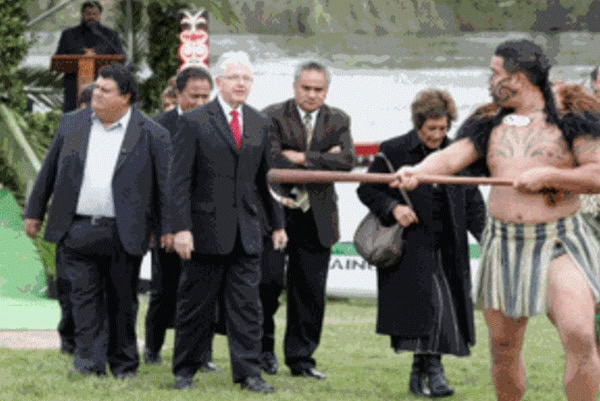
Deed of Settlement and Kiingitanga Accord signed at Tuurangawaewae Marae.
2009
2009
Guardians Establishment Committee finalises Te Ture Whaimana o te Awa o Waikato, otherwise known as the Vision and Strategy for the Waikato River.
The committee developed a logo representing the members working together to guide its future.

2010
7 May 2010
Waikato-Tainui Raupatu Claims (Waikato River) Settlement Act 2010 gains royal assent, establishing the Waikato River Authority to be the custodian of the Vision and Strategy, known as Te Ture Whaimana, and to administer the clean-up fund as sole trustee of the Waikato River Clean-up Trust.
2010
Sep 2010
The Waikato River Independent Scoping Study (WRISS) was published on 1 September 2010 to assess the health of the river and recommend over 60 priority restoration actions.
Under the terms of the Treaty Settlement the Ministry for the Environment commissioned NIWA to prepare the report for the Guardians Establishment Committee, which was a precursor to the Waikato River Authority.

2010
25 Nov 2010
The Waikato River Authority officially became operational as the co-governance body established under the Waikato River settlement legislation.
The Authority’s primary role is to restore and protect the health and wellbeing of the Waikato River, guided by Te Ture Whaimana o Te Awa o Waikato (Vision and Strategy for the Waikato River).

2010
21 Dec 2010
The Waikato River Authority held its inaugural meeting, marking the beginning of its role as the co-governance body responsible for restoring and protecting the health and wellbeing of the Waikato River.
The Authority is made up of 10 members, with five representatives appointed by river iwi and five by the Crown, reflecting an equal governance partnership. Its inaugural co-chairs were Hon. John Luxton, representing the Crown, and Hon. Tukoroirangi Morgan, representing the river iwi.
One of its first decisions was to evolve the logo of its predecessor, the Guardians Establishment Committee, symbolising continuity in the shared vision for the river.

2012
5 Apr 2012
In 2012, a Treaty of Waitangi settlement between Ngāti Maniapoto and the Crown was finalised. A key outcome of the settlement was the enactment of the Ngā Wai o Maniapoto (Waipā River) Act 2012, which strengthened the existing Waikato-Tainui and Upper Waikato River iwi settlement legislation.
The Act extended the reach of Te Ture Whaimana o Te Awa o Waikato – the Vision and Strategy for the Waikato River to include the upper Waipā River.

2013
Mar 2013
The first quarterly newsletter, Maunga ki Tai, From the Mountain to the Sea, is published.
 newsletter Maunga ki Tai is launched.
2014
2014
The Waikato River Restoration Forum is formed, chaired by Waikato River Authority chief executive Bob Penter.
Members of the group, all have significant interest in the Waikato River. It includes representatives from the Waikato River Authority and the five River iwi, Department of Conservation, Fonterra, DairyNZ, Mighty River Power, Genesis Energy (also representing various marae organisations around Huntly) and the Waikato Regional Council. The group has agreed terms of reference aimed at collaborating to achieve integrated restoration for the benefit of the river.
Authority chief executive Bob Penter says an important role for the Waikato River Restoration Forum will be to share information and to work together on major projects relating to the health and wellbeing of the Waikato River.

2016
Mar 2016
The first Five-Year Report was presented to Environment Minister Hon Nick Smith and river iwi by Authority co-chairs Hon John Luxton and Hon Tukoroirangi Morgan including the first ever whole of catchment Report Card for the Waikato and Waipā rivers.
Dr Smith said freshwater issues in New Zealand are very challenging and he congratulated the Authority on its work.
The whole of catchment Report Card grade is a C+ and scores across eight different indicators; Water Quality, Water Security, Economy, Kai, Ecological Integrity, Experience, Effort and Sites of Significance. The Report Card score is not a pass with a C grade regarded as a low rating, meaning overall the standard of river catchment falls short of the expectations of the vision and strategy for a healthy Waikato River.

2019
12 Dec 2019
The Waikato River Authority hosts a climate change workshop at Waikato-Tainui Endowed College at Hopuhopu. The workshop considered the opportunities to respond to the issue of climate change within its work to restore and protect the Waikato and Waipā Rivers.
Over 70 people attended across River iwi, industry sectors, Crown Research Institutes, local government, community groups and Crown agencies including the Ministry for the Environment and the Ministry for Primary Industries.

2020
2020
Authority staff work from home during COVID lockdowns, and river restoration work continues within COVID level 3 restrictions.
River authority calls for a government inquiry into Auckland’s water infrastructure after the city seeks to more than double its water take from the Waikato River. (June 2020)
Authority is involved in an emergency summit that agrees to Auckland taking extra water from the Waikato River. Investment fund reaches $75.4 million. (July 2020)
A group shot of the 2020 Waikato River Authority Board.

2020
Dec 2020
Tipa Mahuta was appointed river iwi co-chair of the Waikato River Authority at a board meeting on December 5, 2020.
Ms Mahuta, a Waikato-Tainui appointee, replaces long standing Authority board member Roger Pikia (Te Arawa River Iwi Trust) who has been in the co-chair role for the past two years.
The Crown co-chair (Paula Southgate) was previously appointed by the Minister for the Environment according to legislation.
Tipa Mahuta says she is delighted to have the unanimous support of river iwi to take on the co-chair role.
“Me mau tonu taatou ki te oohaaki i waihotia mai, tooku awa koiora”.
The importance of the awa to Waikato cannot be overstated, to have such a key role in restoring and protecting the Waikato River is very humbling. More than ever before we now have the opportunity for the communities of the river to come together to ensure the wellbeing of the river for future generations.

2022
May 2022
Following the first reports of gold clams in the Waikato River in May, river iwi later united to collect 125 kg of the invasive pest during an experimental control harvest at Bob’s Landing, near Lake Karāpiro.
Pictured is Zoe Mackness of Te Arawa River Iwi Trust and other iwi members gathering gold clams on 16 August 2023.
The clams were collected, sorted, weighed, and boiled onsite with kawakawa leaves before being buried offsite.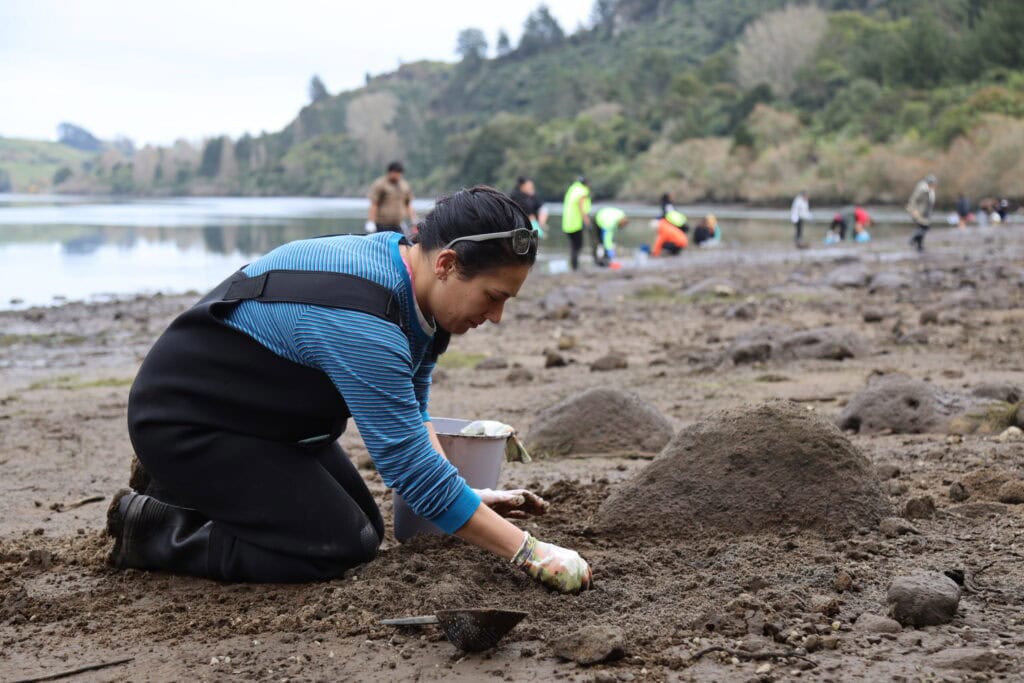
2023
28-29 Nov 2023
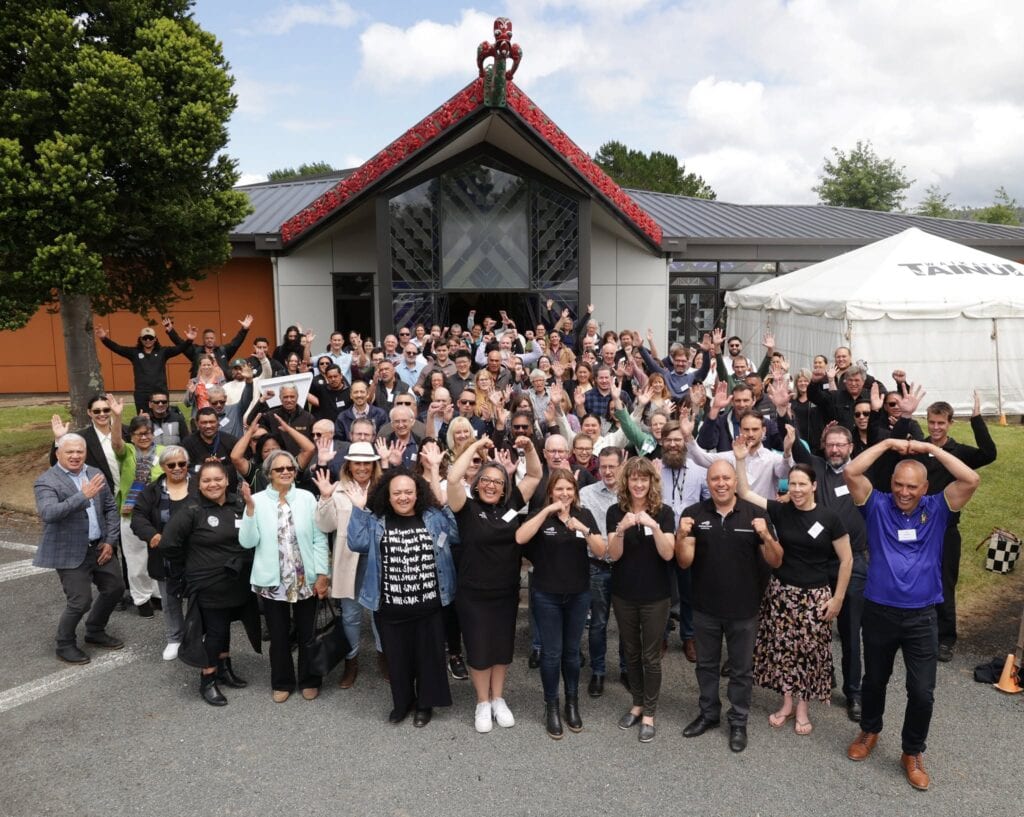
A snapshot of all the river kaitiaki who took part in Te Awa o Waikato River Symposium, with a range of international and local academic speakers at Te Whakakitenga o Waikato Debating Chambers in Hopuhopu.
2024
18 Jun 2024
Antoine Coffin was appointed as the new Kaihautū and Chief Executive Officer of the Waikato River Authority. He succeeded the inaugural chief executive, Bob Penter, bringing over 25 years of experience in Māori resource management, and iwi leadership to lead the restoration of the Waikato and Waipā rivers.

2024
Oct 14, 2024
The Waikato River Authority (WRA) appointed Danny Loughlin as the new Iwi Co-Chair at its board meeting in October.
Danny who represents Ngāti Tūwharetoa has served on the WRA board for nearly six years and held the role of Deputy Iwi Co-Chair for the past four years. He takes on the position of Iwi Co-Chair following the end of term of Tipa Mahuta as the Waikato-Tainui representative.
I am honoured to take on the role of Iwi Co-Chair and continue the important mahi of the Waikato River Authority,” said Danny Loughlin.
“I am committed to raising awareness of our efforts to protect and restore the wellbeing of the Waikato and Waipā Rivers. Waikato River Authority Crown Co-Chair, Stu Kneebone was appointed in 2023 replacing Paula Southgate.

2026
8 June 2026
River Iwi, Ngāti Tūwharetoa, Waikato, Maniapoto, Raukawa, and Te Arawa River Iwi, welcome the release of the Environment Court’s final decision on Plan Change 1 (PC1), describing it as a significant and long-awaited milestone in the intergenerational restoration and protection of the Waikato and Waipaa River catchments.
The decision ends a process spanning almost a decade and represents a critical step in giving practical and enforceable effect to Te Ture Whaimana o Te Awa o Waikato, the Vision and Strategy for the Waikato River.
River Iwi say PC1 is a foundational framework that responds to the cumulative impacts of environmental degradation across the catchment and provides a clear pathway toward restoring the health and wellbeing of the awa for present and future generations.
